
Stamped Concrete Patio Ideas for Spartanburg Homes: Design Guide
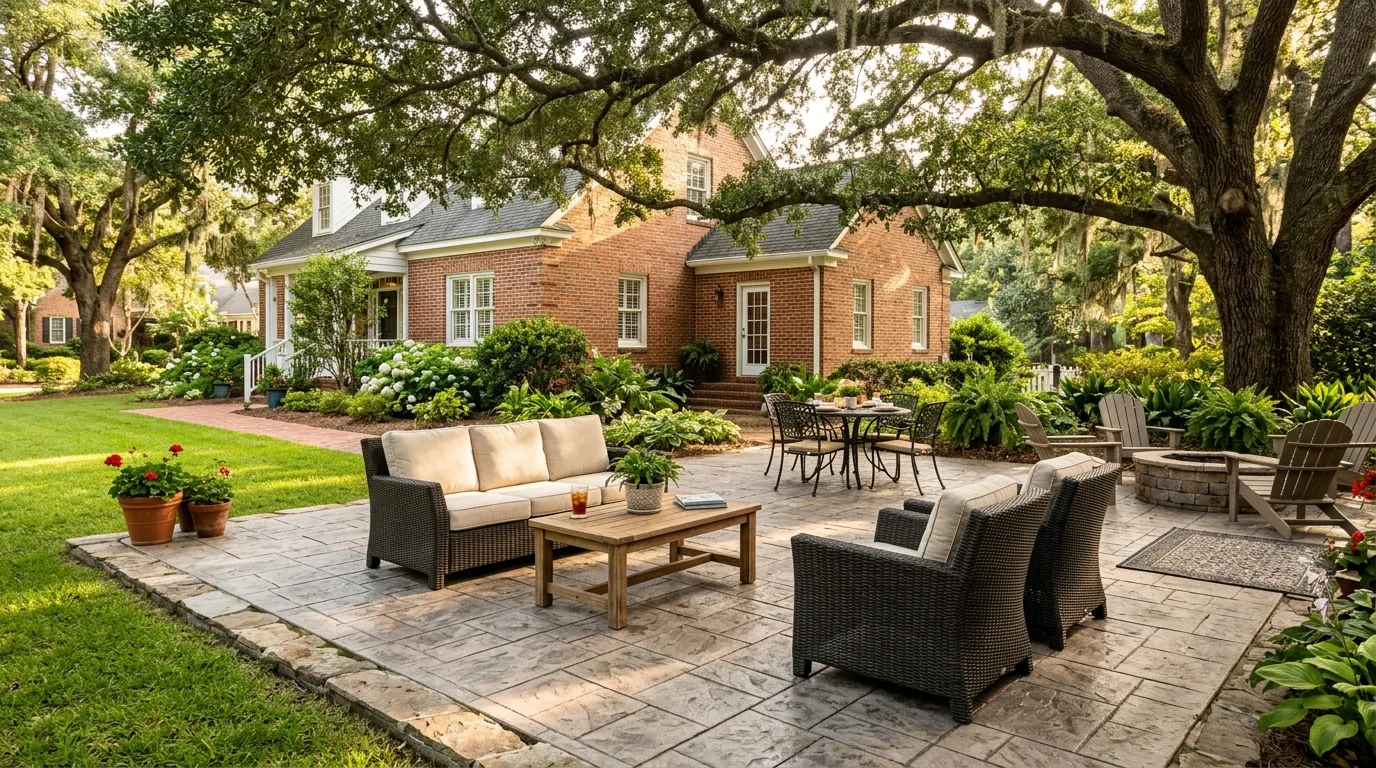
Imagine stepping onto a patio that looks like natural flagstone — without the weeding, the shifting, or the annual resetting that real stone requires. Stamped concrete delivers that aesthetic at a fraction of the cost, with the added durability and low maintenance that make it a top choice for Spartanburg homeowners replacing tired wood decks or upgrading plain concrete slabs. In this guide, we cover the most popular patterns and colors for Spartanburg homes, design combinations that work with typical SC exterior styles, and the climate considerations that affect which products perform best year-round.
Get a Stamped Concrete Patio Estimate in Spartanburg
We help you choose the right pattern and color for your home. Free estimates at (888) 376-0955.
Why Stamped Concrete Works Well in Spartanburg
Stamped concrete is particularly well-suited to Spartanburg’s outdoor living culture. The area’s mild springs and falls — temperatures ranging from the 55s to the low 80s from March through May and again in September and October — create ideal conditions for outdoor entertaining six or more months of the year. A well-designed stamped concrete patio becomes the hub of that outdoor space.
The practical advantages over natural stone paver alternatives are significant for Spartanburg County conditions. Natural stone and brick pavers require periodic resetting as Spartanburg’s expansive Piedmont clay soils shift beneath them — individual pavers tilt, settle, and create trip hazards on a timeline of 5–10 years without maintenance. Stamped concrete is monolithic — a single slab that doesn’t shift piece by piece. While it can crack if improperly installed, a properly prepared stamped concrete patio with adequate base prep for local clay conditions and appropriate expansion joints is more stable than paver alternatives over a 20–30 year horizon.
See our stamped concrete service page for full installation details and cost ranges.
Popular Pattern Options for Spartanburg Patios
Ashlar slate is the most requested pattern in the Spartanburg area. It replicates the look of large, irregular-cut slate tiles in a repeating geometric pattern. The texture reads as natural stone from any distance, and it’s available in warm gray, tan, and charcoal tones that complement the traditional exterior styles common in the Converse Heights and Fernwood neighborhoods. Ashlar works well for both small intimate patios and large entertaining spaces.
Random flagstone creates the organic, hand-laid appearance of real flagstone without the maintenance or cost. The irregular pattern is forgiving on large patio areas where strict geometric patterns can look repetitive. It pairs well with landscaping-heavy yards and works particularly well for Spartanburg homes with mountain-influenced or craftsman-style architecture.
Herringbone brick replicates classic running-bond or herringbone brick at a decorative concrete price point. For homes in Hampton Heights and other traditional Spartanburg neighborhoods where brick is part of the architectural character, herringbone stamped concrete on the patio continues the visual language from the house to the outdoor space.
Wood plank is a newer pattern gaining popularity for pool surrounds and covered patio areas. It replicates the look of deck boards in a concrete surface — giving the visual warmth of wood without rot, warping, or annual refinishing requirements.
Cobblestone and European fan patterns work well for smaller accent areas — entry stoops, walkway sections, or circular design elements within a larger patio.
Choosing a Pattern for Your Spartanburg Patio?
We bring samples and walk you through options at no charge. Call (888) 376-0955 to schedule.
Color Options: Getting the Palette Right
Color is where stamped concrete truly separates from plain concrete — and where homeowners have the most decisions to make. The most durable approach uses two color elements: an integral color mixed into the concrete before the pour (the base color), and a release agent broadcast over the surface during stamping (the accent color). The contrast between base and accent creates the color depth and variation that makes stamped concrete look like natural stone rather than painted concrete.
For Spartanburg homes with traditional red or orange brick exteriors, warm earth tones work best: burnt sienna, terra cotta, and sandstone base colors with contrasting charcoal or chocolate release agents. For homes with gray or white siding — common in newer Spartanburg developments — cooler tones like dove gray, slate, and ash produce clean, contemporary results.
Acid staining after the pour creates a different aesthetic: marbled, translucent, variegated color that looks genuinely organic. Acid stains are best on existing slabs being transformed rather than new pours, and the results are less predictable (which is part of their appeal for some homeowners).
UV-resistant sealers maintain color over time in Spartanburg’s climate. Re-sealing every 2–3 years is more frequent than plain concrete requires (every 3–5 years), but it’s a modest maintenance investment relative to the visual payoff.
Practical Uses for Stamped Concrete in Spartanburg Yards
- Patio replacement: Upgrading a plain concrete slab or deteriorated wood deck to a stamped surface that defines the outdoor living zone.
- Pool surrounds: Slip-resistant stamped concrete around pool areas — textured patterns like slate and stone provide traction while looking polished. Spartanburg’s warm fall extends pool season into October, making pool deck aesthetics matter more.
- Front walkways: Transforming a plain concrete entry path into a flagstone or brick-pattern feature that ties the landscape design together from the street.
- Driveway accents: Adding a decorative border or medallion in the driveway center without replacing the entire slab.
- Outdoor kitchen pads: Creating a defined, level surface for grills, smokers, and outdoor cooking areas near Cottonwood Trail or Croft State Park-adjacent properties where outdoor entertaining is a lifestyle.
- Steps and transitions: Stamped concrete steps between grade changes or from patio to yard maintain the decorative theme through the entire outdoor space.
What to Ask Your Contractor Before Choosing Stamped Concrete
Before committing to a design, ask your contractor to show you completed local projects — not just catalog photos of patterns. Seeing how a specific pattern and color combination looks after 3–5 years in Spartanburg’s climate (including after several freeze-thaw cycles and UV seasons) gives you a realistic picture of long-term results.
Also confirm the sealer system. High-quality penetrating sealers provide better freeze-thaw and UV protection than surface-film coatings for Spartanburg’s climate. And ensure the contractor’s base preparation process meets local clay soil standards — even a beautiful stamped finish will crack and settle if the subbase isn’t properly prepared. For more design inspiration, see decorative concrete options for Spartanburg patios and walkways.
Frequently Asked Questions
How long does stamped concrete last on a Spartanburg patio?
A properly installed stamped concrete patio in Spartanburg lasts 25–35 years as a structural surface. The color and texture finish requires resealing every 2–3 years to maintain its appearance and protect against Spartanburg’s freeze-thaw cycling and UV exposure. With consistent sealer maintenance, stamped concrete patios retain their decorative appeal for decades.
How much does stamped concrete cost compared to plain concrete in Spartanburg?
Stamped concrete in Spartanburg runs $8–$18 per square foot compared to approximately $6 per square foot for plain poured concrete. The premium reflects the additional materials (color pigments, release agents, stamping mats) and labor required to apply the pattern and color before the concrete sets. Contact us for a written estimate specific to your design and project size.
Can stamped concrete be slippery when wet in Spartanburg’s rain?
Textured stamped concrete patterns — slate, stone, cobblestone — provide traction comparable to brushed concrete. Smooth patterns or heavy sealer coats can be slippery when wet. For pool surrounds and areas that see regular rainfall, we recommend textures with adequate grip and anti-slip additives in the sealer. Spartanburg’s 48-inch annual rainfall makes slip resistance a practical consideration for any outdoor concrete surface.
See Stamped Concrete Samples for Your Spartanburg Home
Call Spartanburg Concrete Pros at (888) 376-0955 — we bring pattern and color options to you.
Related: