
Concrete Foundation Repair Guide for Spartanburg Homeowners
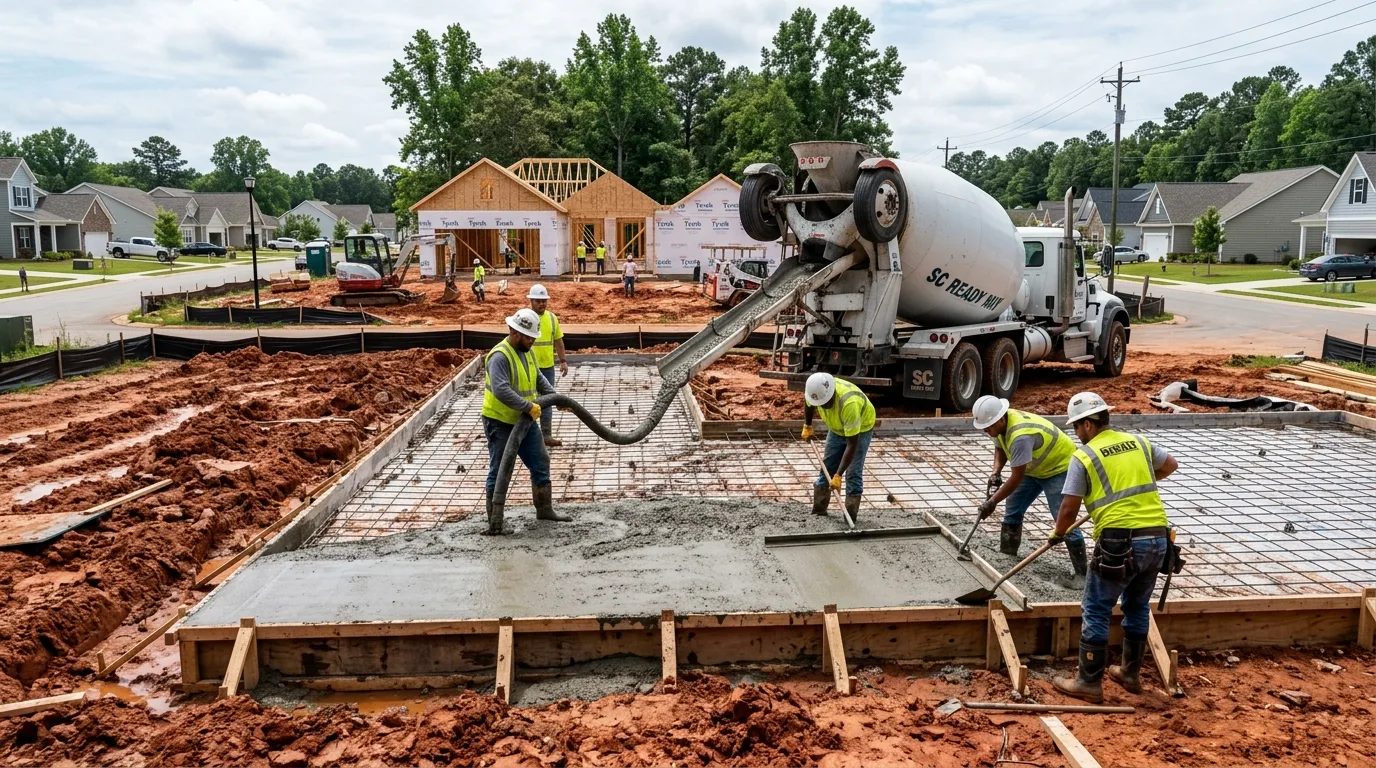
South Carolina foundation inspectors report that Spartanburg County generates more clay soil-related foundation repair calls per capita than most Upstate SC counties — a direct consequence of the Piedmont region’s expansive Cecil and Pacolet clay series soils that underlie most of the area. Concrete foundation repair in Spartanburg is not an abstract concern: it’s a practical reality for homeowners whose properties were built before modern subbase and drainage engineering standards, or whose drainage has deteriorated over time. This guide covers how to recognize foundation distress, what repair options exist for Spartanburg’s specific conditions, and when surface repair is appropriate versus when structural intervention is needed.
Concerned About Foundation Cracks in Spartanburg?
We assess concrete foundation damage honestly — no upselling. Call (888) 376-0955 for a free assessment.
Why Spartanburg Foundations Are Particularly Vulnerable
The soil conditions beneath Spartanburg County homes create a more challenging environment for concrete foundations than most of the Southeast. Cecil and Pacolet clay series soils have a high shrink-swell coefficient — they expand significantly when wet (absorbing Spartanburg’s 48.41 inches of annual precipitation) and contract during dry spells, particularly in summer when high evapotranspiration pulls moisture from the top several feet of soil.
This shrink-swell cycle applies upward and lateral pressure to foundation slabs when the soil swells, then creates voids beneath slabs when the soil contracts. In neighborhoods throughout Spartanburg — from the older homes in Hampton Heights to the Grain District — this cycle repeats every year, compounding cumulative stress on concrete foundations that weren’t designed with the full load of soil movement in mind.
Spartanburg’s freeze-thaw cycling adds another stress mechanism. January average lows of 29°F create conditions where water in soil near the foundation perimeter freezes and expands. Frost heave at the slab perimeter is the most common winter-related foundation damage pattern in Spartanburg County, particularly in areas where perimeter drainage has been compromised by landscaping or grading changes.
Signs Your Concrete Foundation Needs Attention
Recognizing foundation distress early is the difference between a manageable repair and a major structural intervention. Watch for these indicators in your Spartanburg home:
- Diagonal cracks at wall corners — particularly at the corners of door and window openings — indicate differential settlement where one part of the foundation has dropped relative to another.
- Floors that slope visibly when a marble is placed on the floor, or where furniture feels unstable on a flat surface.
- Doors and windows that stick, bind, or no longer close properly — the frame has been racked by foundation movement.
- Gaps appearing between the wall and floor, or between the wall and ceiling at interior or exterior corners.
- Cracks in the foundation slab itself — particularly step cracks in concrete block or stair-step cracks in poured foundations.
- Persistent moisture in the basement or crawl space after rainfall, indicating drainage failure against the foundation.
Any single symptom warrants monitoring and assessment; multiple symptoms together indicate that professional evaluation is needed promptly. See our concrete repair service page for a full assessment process description.
Seeing Foundation Warning Signs in Spartanburg?
Call Spartanburg Concrete Pros at (888) 376-0955 for an honest evaluation — free of charge.
Foundation Repair Options for Spartanburg Homes
Drainage correction is often the first intervention — and the one most commonly overlooked. If poor perimeter drainage is driving soil saturation and the shrink-swell cycle, repairing the surface concrete without fixing the drainage will cause the repair to fail. Regrading soil away from the foundation, installing perimeter drain tile, and extending downspouts away from the foundation are often prerequisite to any concrete repair work.
Crack injection and sealing addresses hairline to moderate cracks that have not caused significant differential movement. Epoxy injection provides a rigid, high-strength repair appropriate for structural cracks. Polyurethane foam injection is used for cracks where flexibility and water-stopping properties are needed. Neither approach is appropriate for cracks caused by ongoing active settlement — the injection will re-crack if the underlying movement continues.
Slab lifting (mudjacking or polyurethane foam injection) is used when sections of a slab-on-grade have settled below their original elevation, creating slope, drainage toward the structure, or trip hazards. Mudjacking pumps a cement-soil grout mixture beneath the slab to fill voids and lift it back to grade. Polyurethane foam injection is a newer technique that uses expanding foam to achieve the same lift with less material weight. Both are appropriate for void-related settlement in Spartanburg County’s clay conditions.
Pier installation is a structural intervention for significant, ongoing settlement. Steel piers or helical piers are driven through the active clay zone to stable bearing material below — typically rock or very dense soil — and the foundation is transferred to the piers. This stops settlement permanently regardless of what the surface clay does seasonally. Pier work is the appropriate response when differential settlement has caused significant structural distress and other repair approaches won’t provide lasting results.
Slab replacement is warranted when the existing slab has deteriorated structurally beyond the threshold where repair is cost-effective. This involves demolishing the failed slab, addressing drainage and soil conditions, installing proper base preparation (compacted gravel, vapor barrier, reinforcement), and pouring a new slab to current code standards. For Spartanburg properties, this is the opportunity to install the base preparation that the original slab lacked. See our concrete foundations service page for what new slab installation involves.
What Affects Foundation Repair Cost in Spartanburg
Concrete foundation repair costs in Spartanburg range from a few hundred dollars for crack injection to tens of thousands for pier installation on a severely settled foundation. The critical factor is identifying the right repair scope for the actual problem — not underspending on a surface fix that won’t hold, and not overselling a structural solution when drainage correction and crack injection would suffice.
We provide written assessments that distinguish between the repair work itself and any preparatory work needed (drainage correction, soil stabilization), so Spartanburg homeowners understand exactly what they’re investing in. Across Spartanburg County — whether the property is in Spartanburg proper or in Greer or Woodruff — the same assessment and transparency standards apply.
Frequently Asked Questions
How do I know if my Spartanburg foundation cracks are serious?
The key indicators of serious foundation distress are differential movement (one side of a crack higher than the other), crack widths exceeding 1/4 inch, and cracks accompanied by door or window binding. Hairline cracks that have remained stable for years are generally cosmetic; cracks that are visibly growing or show differential movement require professional evaluation. Document any cracks with photos quarterly and note whether they’re growing.
What’s the difference between foundation settling and foundation failure in Spartanburg?
Some settlement of a new structure is normal and expected during the first few years as soil adjusts. Foundation failure refers to ongoing progressive settlement that doesn’t stabilize, particularly differential settlement where different parts of the foundation settle at different rates, causing structural distress. Spartanburg County’s clay soil makes some degree of seasonal movement (heave in wet periods, settlement in dry periods) common — the concern is cumulative differential settlement that isn’t corrected by seasonal rebound.
Can I repair a concrete foundation crack myself in Spartanburg?
Surface crack injection with consumer-grade products can be appropriate for very minor hairline cracks that are confirmed stable. For any crack showing differential movement, width exceeding 1/8 inch, or accompanied by structural symptoms (sticking doors, sloping floors), professional assessment is needed before any repair. DIY crack filling on an actively settling foundation delays necessary structural intervention.
Get a Free Foundation Assessment in Spartanburg
Spartanburg Concrete Pros provides honest evaluations of concrete foundation issues throughout Spartanburg County. Call (888) 376-0955.
Related: